Hiba
Thujopsis dolabrata 'Nana'
Cypress family (Cupressaceae)



Holy cypress
The hiba cypress originates from central and southern Japan. The species name dolabrata means ‘axe-shaped’ and refers to the shape of the distinctive white stomata on the underside of the scaly leaves.
In Japan the tree is called asunaro, a combination of the Japanese descriptive, asu wa hinoki ni narou, meaning ‘tomorrow it will become a hinoki cypress’. The tree resembles a smaller version of the hinoki cypress (Chamaecyparis obtusa).
Hiba is one of the five sacred trees of Kiso. Only the wood of these trees can be used to build Shinto temples. Only wealthy and influential families were able to fell the sacred trees from the Kiso forest in central Honshu. The wood is very durable and smells delightful.
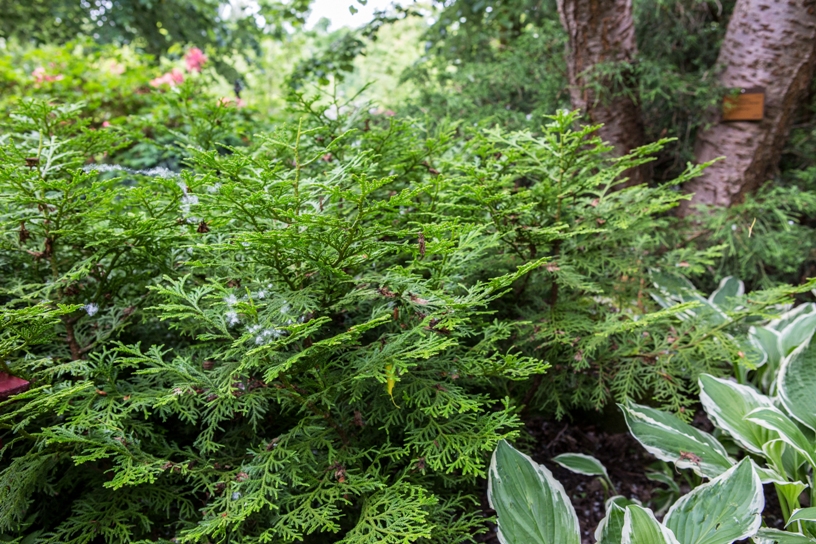
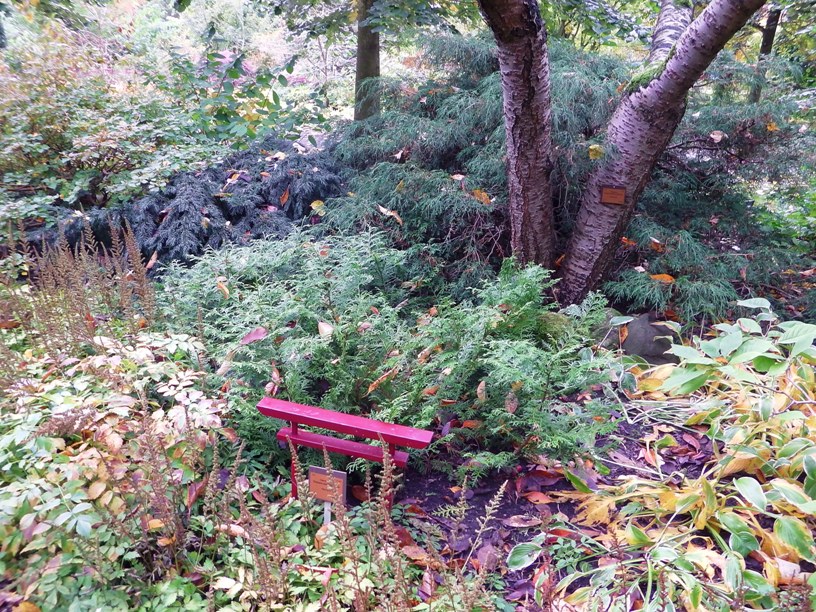
Thujopsis dolobrata ‘Nana’ is a dwarf shape..
Themes
Wood is used as timber.
It was not easy for the Dutch to transport these plants alive. Many species from Japan were first grown in the mountain gardens on Java. In 1853 Teijsmann (who was appointed keeper of the Buitenzorg Botanical Garden in 1830) finally succeeded. He sent the plants with Commander P. Huidekoper of the frigate 'Prince Frederik of the Netherlands' to Den Helder and on April 18, 1854 managed to land some living plants. They were subsequently planted on April 23 in the Leiden Botanic Garden and they were Thujopsis dolobrata.
Fragrant; contains resin.
Details
| Description: | Conifer, witches' broom, on avergae up to 1 m. |
|---|---|
| Distributions: | Only found in cultivation. |
| Year cycle: | Perennial (polycarpic evergreen) |
| Hardiness: | -4 - 5 f (hardy - very cold winter) |
| Flower color: | Not applicable |
| At its best: | Oktober - maart |