• Gardens
  • Find plants
  • Floriade 2022
  • Botanic guardians
  • home
  • about us
  • contact
Nederlands
  Back to results

Dumpling Cactus

Lophophora williamsii

Cactus family (Cactaceae)

Vulnerable

Green desert-dreamer

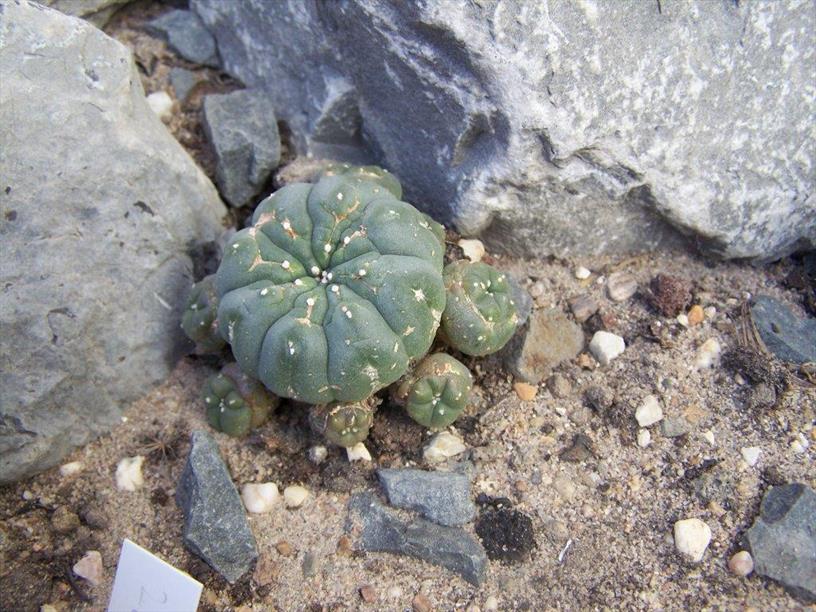
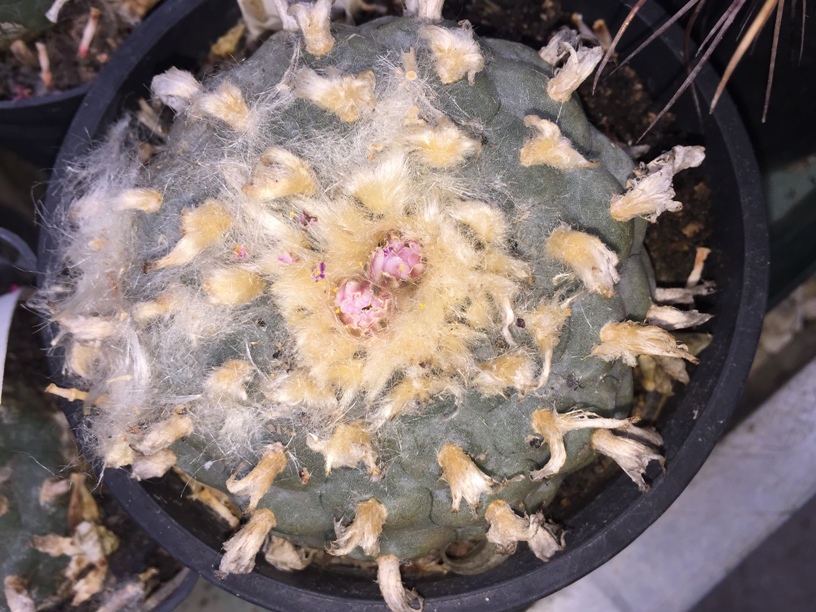
The peyote cactus, native of Mexico and southern Texas, is a small, blue-green, thornless, balloon-like plant. Sitting on top are small amounts of wool. The cactus grows very slowly and produces small pink flowers in the wild only after 10 years. It rarely exceeds 15 cm.

Most cacti protect themselves from animals by their thorns but the peyote has a different weapon: both animals and people hallucinate after eating it. The native Indians knew this long before westerners claim to have ‘discovered’ it in the 1950s and consequently started experimenting with it. The drug LSD was developed from the chemical substances found in this cactus. Both LSD and the peyote cactus are still loved by modern day 'dreamers'. This popularity has led to its disappearance from its natural habitats and as a result the cactus is now on the Red List.

Read more.... »
Green desert-dreamer

The peyote cactus, native of Mexico and southern Texas, is a small, blue-green, thornless, balloon-like plant. Sitting on top are small amounts of wool. The cactus grows very slowly and produces small pink flowers in the wild only after 10 years. It rarely exceeds 15 cm.

Most cacti protect themselves from animals by their thorns but the peyote has a different weapon: both animals and people hallucinate after eating it. The native Indians knew this long before westerners claim to have ‘discovered’ it in the 1950s and consequently started experimenting with it. The drug LSD was developed from the chemical substances found in this cactus. Both LSD and the peyote cactus are still loved by modern day 'dreamers'. This popularity has led to its disappearance from its natural habitats and as a result the cactus is now on the Red List.

Considered locally to be a living god

The Mescal Button or also known as peyote (Mexican, peotl, el mescalito) is a small, spineless, spherical cactus which grows in Mexico and just over the border into the USA. This slow growing plant is ribbed and grey-green. In the wild it can sometimes take 12 years before it flowers. The pink flower is located in the heart of the cactus. Instead of spines the Mescal Buttons has sometimes a tuft of hair on the areole (the felt like area where the spines usually emerge). The genus name refers to this – lopho means ‘pompom’ and phora means ‘wearer’. Lophophora williamsii is known for its psychoactive substances (including mescaline), which when used can induce hallucinations. As a consequence there is an active trade in Mescal Buttons. In the US this plant can be legally used by members of the NAC, the Native American Church, which has approximately 250,000 known members. In Mexico the Mescal Buttons is collected legally by the Huichol Indians. The Mescal Buttons is considered locally as a living god and has a long history of use by the native inhabitants of northern Mexico and southwest America - according to archaeologists for 5700 years.

Ecology and habitat

Lophophora williamsii grows in the dry, rocky deserts on calcareous soils. The moisture in the air condenses on the central tuft of hairs which supplies addition water to the plant. The Mescal Buttons is well camouflaged in its stony environment. The psychoactive substances protect the plants from animals, but as such makes it sensitive to trade as it is a favourite for the ‘aficionados’.

Threat

Mescal Buttons are still collected in large numbers. Its decline over the last few decades is estimated to be about 30%. Often the whole plant is dug up which is a pity because the cactus can regrow from a severed taproot.

« Description

Present in:

Hortus Botanicus Amsterdam
Hortus Overzee
Botanische tuin Zuidas

Themes

The Botanical Gardens Association cannot take any responsibility for any adverse effects of the use of plants. Always seek the advice of a professional before using any plant medicinally. Always seek the advice of a professional before using any plant medicinally.

Crown jewel in the Zuidas Botanic Garden.

Because of its hallucinogenic properties this species is classed as a drug. However, the plant is also used to make ointments on an industrial scale - the ointment is not classed a drug.

The peyote cactus is locally considered a living god by the native tribes of northern Mexico and southwest America; archaeologists believe it has been in use for 5700 years.

Details

Description: Succulent, cactus, up to 0.06 m, 0.12 m in diameter.
Distributions: Mexico, united states (texas)
Habitat: This geophytic, button-like cactus species occurs in xerophyllous scrub, including the 'tamaulipan thorn scrub', on calcareous soils.
Year cycle: Perennial (trees and shrubs included)
Hardiness: 34 - 41 f (tender - cool or frost-free glasshouse)
Flowering period: Mei - augustus
Flower color: Pink, white
At its best: Mei - augustus

Sources

http://www.iucnredlist.org/details/151962/0,
https://www.rhs.org.uk/Plants/10533/i-Lophophora-williamsii-i/Details
  Back to results
NVBT
  • Press
  • Contact
  •